Wits RHI is a globally recognised African health research institute based at the University of the Witwatersrand,
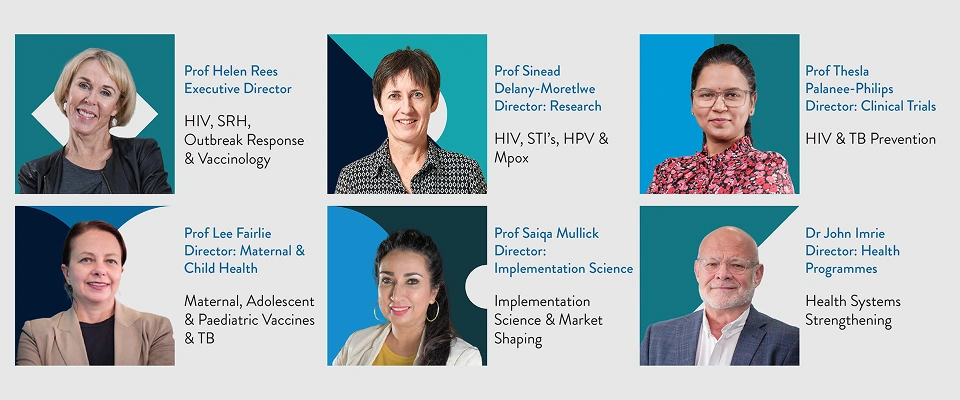
delivering high-impact science to address some of the greatest public health concerns affecting the African region. With over 30 years of experience in investigator-led and consortia studies, Wits RHI excels in policy development and implementation across diverse populations and all phases of clinical trials. Wits RHI’s multidisciplinary approach combines research, technical assistance, advocacy, and health systems strengthening to deliver impactful solutions in infectious and vaccine-preventable diseases, maternal and family health, antimicrobial resistance, and climate-related health crises. Led by predominantly female African scientists, Wits RHI combines scientific rigour with deep contextual understanding.
Wits RHI plays a leading role in the development, evaluation, and implementation of new medicines, vaccines, diagnostics, artificial intelligence tools, and prevention technologies for diverse populations, including children, adolescents, women (including pregnant and lactating women) and men. From its foundational work in reproductive health and HIV, the Institute has expanded its research into pandemic preparedness and emerging health threats, gaining global recognition for leadership in COVID 19 and Mpox research, antimicrobial resistance, and cancers associated with HIV and STIs, particularly cervical cancer and human papillomavirus (HPV).
Wits RHI’s multidisciplinary approach combines research, technical assistance, advocacy, and health systems strengthening to deliver impactful solutions in infectious and vaccine-preventable diseases, maternal and family health, antimicrobial resistance, and climate-related health crises. As one of the few institutions in the southern hemisphere engaged in clinical trials, implementation science, market shaping, and regulatory strengthening, Wits RHI helps ensure that lifesaving innovations reach low- and middle-income countries faster and more equitably.


Our work is focused on populations that are most in need, marginalised, or hard to reach. These include:
Wits RHI was established in 1994 by Professor Helen Rees to support South Africa’s newly democratic government in shaping national health policies. It has grown into a leading African research and implementation institute with a global reputation for innovation and responsiveness to health challenges.
With over 30 years of experience in investigator-led and consortia studies, Wits RHI excels in policy development and implementation across diverse populations and all phases of clinical trials. Its multidisciplinary approach combines research, technical assistance, advocacy, and health systems strengthening to deliver impactful solutions in infectious and vaccine-preventable diseases, maternal and family health, antimicrobial resistance, and climate-related health crises.
Wits RHI’s main site locations are in the Hillbrow Health Precinct (HHP), which aims to create an environment that tackles public health challenges while promoting urban renewal in Hillbrow. The precinct is home to exceptional health services, advanced training for healthcare professionals, and world-class research, all of which are highly relevant to South Africa and the broader African continent. Professor Helen Rees, Executive Director of Wits RHI, spearheaded the coordination of the HHP initiative.
Abstract
Intramuscular depot medroxyprogesterone acetate (DMPA-IM), levonorgestrel implants (LNG-implant), and copper intrauterine devices (Cu-IUD) are widely used in Africa. Their impact on human papillomavirus (HPV) incidence and clearance remains unclear. We compared these outcomes in a subsample from a randomised trial.